For fleet managers and heavy equipment operators, a burst hose is more than an inconvenience. It's the difference between a $50 part swap and a five-figure engine repair. Many operators struggle with catching hose failure early because the warning signs look minor until they're not.
The good news: coolant hose failures are almost always preventable. This guide breaks down the root causes, the signs that precede a burst, and the maintenance habits that keep hoses intact for years, not months.
Key Takeaways
- Coolant hose bursts trace back to five causes: overpressure, age, bad installation, chemical wear, and physical damage.
- Watch for cracks, bulges, steam, sweet-smelling vapor, or a temperature gauge that won't settle.
- Cooling-system roadside repairs average $704 per incident in the truckload segment, excluding secondary engine damage.
- Regular inspection, correct coolant chemistry, and proper clamp torque prevent most failures early.
- OEM-equivalent replacement parts outlast generic alternatives under heat and pressure cycling.
Common Causes of a Coolant Hose Burst
A coolant hose rarely fails for no reason. Most bursts trace back to one (or several compounding) root causes that build up over weeks, months, or years of operation.
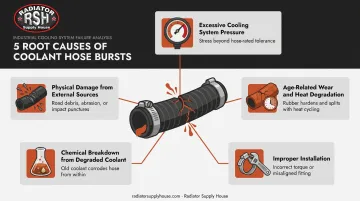
Excessive Cooling System Pressure
Cooling systems run pressurized on purpose: it raises the boiling point of coolant so it can absorb more heat. But that pressure has limits, and several failures push past them:
- A stuck-closed or failing radiator cap that won't vent excess pressure
- A blocked or clogged radiator restricting coolant flow
- A blown head gasket forcing combustion gases into the cooling system
Cummins' ISX15 maintenance guide specifies checking the radiator cap for a proper 15 psi seal at every service interval, a reminder that cap condition directly governs system pressure.
Overpressure risk climbs during towing heavy loads, running in high ambient heat, or holding max RPM for extended stretches, exactly the conditions common on construction sites and long highway hauls.
Age-Related Wear and Heat Degradation
Rubber hardens with age. Constant exposure to engine heat and pressurized coolant dries out the rubber compound, and it starts to crack, stiffen, or lose flexibility.
Here's the tricky part: internal walls can delaminate before any crack shows up on the outside. A hose can look fine and still be failing from the inside out.
Heavy equipment takes this harder than a passenger vehicle. Dusty job sites, extreme ambient swings, and constant vibration accelerate the breakdown of hose material well before a standard replacement interval would suggest it's necessary.
Improper Installation
A hose that's the wrong shape, size, or tension for the job is a failure waiting to happen. Common installation mistakes include:
- Kinked, over-stretched, or twisted routing that creates constant stress points
- Clamps torqued too loose (causing slippage and leaks) or too tight (cutting into the hose wall)
- Mismatched hose sizes used as a quick fix instead of the correct part
This is especially common after DIY maintenance or when a shop grabs a "close enough" replacement instead of the correct part number for that specific make and model.
Chemical Breakdown from Degraded Coolant
Old coolant loses its corrosion inhibitor package over time and turns acidic. That acidic coolant attacks hose material from the inside through a process called electrochemical degradation (ECD), a slow electrical reaction between the coolant, the metal hose fitting, and the rubber tube that eats pinholes into the hose wall from within.
Gates' ECD hose research documents this failure mode extensively, noting that ECD attacks typically start near the metal stem connection and go undetected until the hose fails.
Mixing incompatible coolant chemistries (OAT with HOAT, for example) accelerates ECD significantly. It's an easy mistake to make in a fleet shop juggling multiple equipment brands with different coolant specs.
Physical Damage from External Sources
Sometimes the cause has nothing to do with age or chemistry. Physical damage includes:
- Road debris striking the hose or its connections
- Vibration-induced rubbing against brackets, fittings, or other engine components
- Nicks or weak spots created by tools during unrelated maintenance work
Heavy equipment engine bays are tight by design. In excavators, loaders, and ag machines, hose routing often runs close to moving parts and hot components, making chafing and abrasion a frequent, and preventable, failure point.
What Happens If a Burst Coolant Hose Goes Unaddressed
The consequences escalate fast. Once a hose bursts, coolant drains out rapidly and the engine starts overheating almost immediately.
Left unchecked, that overheating can:
- Warp cylinder heads
- Blow out gaskets
- Score piston cylinders
- Seize the engine entirely
Repair costs at that point far outweigh what a hose replacement would have cost. According to FleetNet America's Q3 2020 data, the average cooling-system roadside repair runs $704 in the truckload segment. That figure only covers the direct repair, not the downstream engine damage a burst hose can trigger.
For commercial operators, the operational hit stacks on top of the repair bill. A breakdown on the highway or job site means towing, missed deadlines, emergency callouts, and possible damage to other cooling system parts like the radiator or water pump.
Warning Signs Your Coolant Hose Is About to Fail
These signs typically show up before a full burst. This is the window where a $30 hose costs $30, not $3,000.
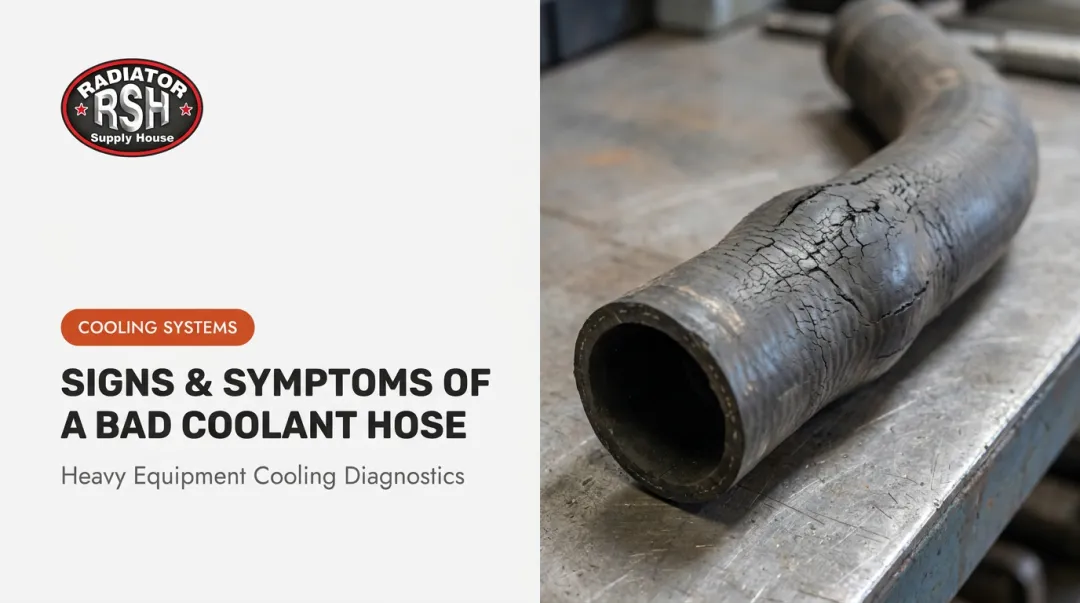
- Visible surface deterioration: cracks, bulges, or swelling on the exterior. A gentle hand-squeeze test that feels rock-hard or mushy signals internal breakdown.
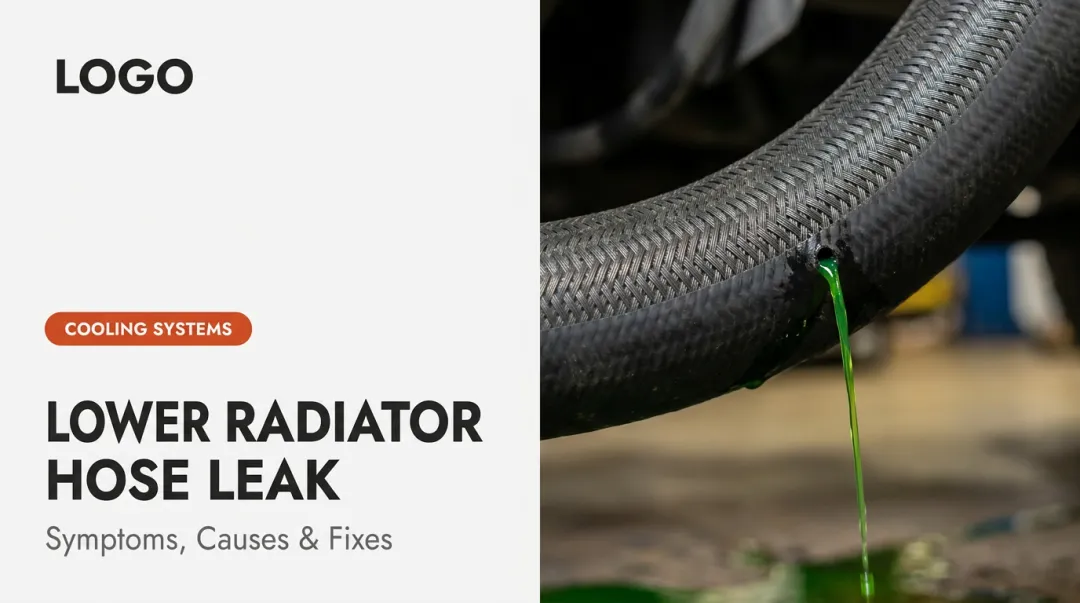
- Recurring coolant loss: leaks at hose connections, a temperature gauge that keeps climbing, or a low coolant warning that returns after you just topped it off.
- Steam or sweet-smelling vapor from the engine bay while running, or a coolant puddle under the equipment after it's parked.
Any one of these on its own deserves a look. Two or more together mean it's time to pull the equipment from service.
How to Prevent a Coolant Hose from Bursting
Prevention comes down to scheduled maintenance habits and smart part selection. Most burst-hose events are avoidable long before they happen.
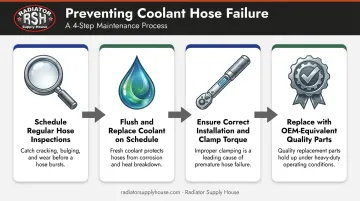
Schedule Regular Visual and Physical Hose Inspections
Check every hose — upper, lower, and bypass — at each oil change or before high-demand seasons like summer heat or winter cold transitions. This catches early cracking, softening, or swelling before pressure turns it into a full rupture, and surfaces loose clamps before they become leaks.
If a hose is 3-4 years old, inspect it now. Fleet operators should build this into pre-shift or pre-season checklists as a standing item, not an afterthought.
Flush and Replace Coolant on Schedule
Drain, flush, and refill with the correct coolant type and concentration per manufacturer spec. Never mix coolant chemistries.
This removes acidic, depleted coolant before it can trigger electrochemical degradation from the inside out, and it prevents mineral scale buildup that raises system pressure over time.
Follow OEM intervals — these vary widely by application, so check your specific engine's manual rather than assuming a universal number. For heavy-duty diesel applications, test coolant with SCA test strips and supplement as needed.
Ensure Correct Hose Installation and Clamp Torque
Use properly sized hoses for the specific equipment model. Route without kinks or sharp bends, and torque clamps to manufacturer spec using an actual torque wrench, not a guess by feel.
Doing this eliminates the stress concentration points that cause premature wear and connection failures. Double-check torque after any engine removal or reinstallation work, since hoses often get bumped or shifted during that process.
Replace Hoses with OEM-Equivalent Quality Parts
Generic or undersized hoses cut corners on the material and pressure ratings needed for heavy equipment's thermal and pressure demands. Quality replacement parts resist heat, chemical attack, and pressure cycling far longer.
Radiator Supply House carries OEM-equivalent ICEBOX Replacement cooling system components across major manufacturers, including Caterpillar, Komatsu, John Deere, and Freightliner. When you're replacing a hose, check the condition of connected components too — radiators, oil coolers, tanks. An aging part left in place can undercut the life of everything new around it.
Tips for Long-Term Coolant Hose Health
A few habits extend hose life well beyond routine servicing:
- Keep an inspection log for each machine, tracking hose age, replacement dates, and coolant top-offs to catch slow leaks early.
- Train operators to recognize warning signs, such as steam, a sweet smell, or temperature spikes, and give them authority to pull equipment immediately instead of trying to nurse it to the shop.
- Watch the temperature gauge during heavy-load operation. Chronic near-overheat events age hoses faster even when no burst ever occurs.
- Add protective sleeving or heat shielding on hoses routed near exhaust components or moving parts in dense engine bays.
None of this demands specialized tools or certifications, just the discipline to log it every time a hose gets checked.
Conclusion
Every coolant hose burst has an identifiable cause: too much pressure, aging material, bad installation, degraded coolant, or physical damage. Each cause has a prevention step that costs a fraction of the failure it prevents.
For fleet operators and heavy equipment managers, a proactive cooling program means better uptime, safety, and cost control. Radiator Supply House stocks OEM-equivalent and ICEBOX aftermarket hoses and cooling parts to keep that program running smoothly.
Frequently Asked Questions
What happens if a coolant hose bursts?
Coolant drains rapidly and the engine starts overheating within minutes. Continued operation risks severe internal damage, including warped cylinder heads or a seized engine. Shut down immediately.
Can I drive with a burst coolant hose?
No. The engine can sustain irreversible damage within minutes of losing coolant. Shut the vehicle or equipment down and arrange a tow or recovery instead of continuing to operate it.
How much does it cost to fix a burst coolant hose?
The hose itself is inexpensive to replace, but costs climb fast if overheating causes secondary damage to the head gasket, radiator, or water pump. Cooling-system roadside repairs alone average $704 in commercial trucking.
Why do my coolant hoses keep bursting?
Repeat failures usually trace back to chronic overpressure from a bad cap or blocked radiator, degraded coolant breaking down the hose material, or low-quality replacement parts. A full cooling system inspection pinpoints the cause.
How long do coolant hoses typically last?
Most hoses last several years under normal conditions, though heavy equipment running in extreme heat, dust, or high-load cycles often sees shorter service life. Proactive replacement beats waiting for a failure.
How do I know if my coolant hose is about to fail?
Look for visible cracks, bulges, or a mushy/hard feel when squeezed. Recurring low coolant levels and steam or a sweet smell from the engine bay are also strong signals the hose needs immediate attention.