Introduction
A mini excavator packs a diesel engine, hydraulic system, and cooling package into a footprint smaller than most pickup trucks. That tight engine bay means heat has nowhere to go once airflow gets restricted.
A radiator packed with mud, grass clippings, or demolition dust can't shed heat fast enough, and that's when small problems escalate. Operators who put off radiator cleaning often end up trading a simple, low-cost fix for an overheated engine, warped head, or a full radiator replacement.
This guide covers the warning signs to watch for, a step-by-step cleaning process, common field repairs, and a maintenance schedule you can actually follow. Whether you're running an E26 on a landscaping crew or an E85 on a demolition site, the fixes below apply.
TL;DR
- Clean the radiator fins every 250–500 hours, or sooner in dusty conditions
- Watch for rising coolant temps, debris-packed fins, weak hydraulics, or leaks
- Most cleaning and minor repairs (bent fins, small leaks) are DIY-friendly
- Cracked tanks, internal tube failures, and core damage need a professional shop
Signs Your Bobcat Mini Excavator Radiator Needs Cleaning or Repair
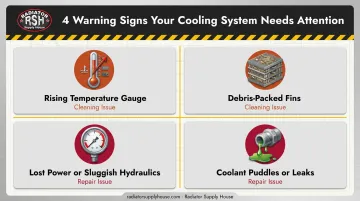
Four symptoms show up over and over on job sites, and they don't all mean the same thing.
- Rising temperature gauge during normal work: The needle creeping toward high during routine digging (not heavy loads) signals restricted airflow, usually a cleaning issue.
- Visible debris packed in the fins: Mud, grass, or fine dust matted across the fins is the most obvious cleaning trigger, visible before the gauge ever moves.
- Lost power or sluggish hydraulics: A thermally stressed engine pulls back power to protect itself, pointing to either a dirty radiator or a developing repair issue.
- Coolant puddles or frequent top-offs: This is almost always a repair signal, a leak somewhere in the hose connections, cap, or radiator itself.
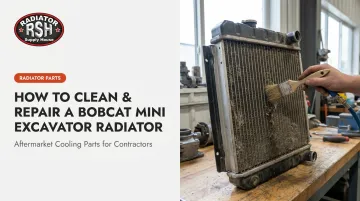
On inspection, a dirty radiator on a Bobcat mini excavator typically looks matted with fine dust, chopped grass, or an oily film from nearby hydraulic work. Machines used in demolition, landscaping, and agricultural settings clog faster because the particulates are smaller and stickier than typical construction dirt.
What Newer Dashboard Warnings Mean
Newer Bobcat models add another layer of warning: a coolant temperature light, unusual steam, or a sweet smell from the engine bay. The machine may even drop into a protective shutdown mode.
These aren't cosmetic warnings. Bobcat's warranty terms exclude damage tied to skipped maintenance or airflow obstruction. Ignoring a warning light can leave you paying out of pocket for damage that timely service would have caught.
How to Clean a Bobcat Mini Excavator Radiator: Step-by-Step
Before You Begin: Tools and Safety
Gather these before you start:
- Compressed air or an air compressor with a blow gun
- Soft-bristle brush
- Garden hose or pressure washer set to the lowest pressure setting
- Fin comb sized to match your radiator's fin pitch
- Foaming, non-acid radiator cleaning solution
- Safety goggles and gloves
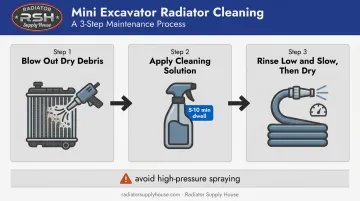
A word of caution: high-pressure washing straight into the fins is the single most common way operators damage a mini excavator radiator. It bends fins flat, reducing airflow instead of improving it.
Before touching anything, shut the machine down and let the engine cool for 30–60 minutes, set the parking brake, and open the rear engine access panel. Most E-series models (E26, E35, E50, E60, E85) use a rear cover that lifts or swings open, but panel design varies by model year, so check your operator's manual if you're unsure.
Step-by-Step Cleaning Process
- Blow out dry debris. Use compressed air directed from the engine side out toward the front to avoid driving debris deeper into the fin stack. Follow up with the soft brush on any caked-on patches.
- Apply the cleaning solution. Spray the foaming cleaner evenly across the fin face and let it dwell for the time listed on the label, typically 5–10 minutes. Skip acid-based cleaners: most Bobcat mini excavators use aluminum-core radiators, which are vulnerable to acid corrosion over repeated use.
- Rinse low and slow, then dry. Use a garden hose or a pressure washer on its lowest setting, working from the inside out and moving in line with the fins rather than across them. Let everything air-dry before restarting, then check hose connections, the radiator cap, and coolant level before firing the engine back up.
How to Repair a Bobcat Mini Excavator Radiator
Minor Repairs You Can Do On-Site
Bent or collapsed fins are the most common field repair, especially on machines doing brush-clearing or demolition work. A fin comb, matched to the correct fins-per-inch pitch, or a flat-head screwdriver used carefully can straighten individual fins. Using the wrong comb pitch will just create new damage, so measure before you buy one.
Small external leaks and pinhole cracks can be handled two ways as a short-term fix:
- Radiator stop-leak additive poured into the coolant, for minor weeping leaks
- Epoxy-based repair compound applied to a small external crack on an aluminum tank, once the surface is fully clean and dry
Treat both as temporary measures only. Get the radiator professionally inspected at your next service interval rather than trusting a field fix indefinitely.
When to Call a Professional
Some problems are beyond a jobsite fix:
- Internal tube failure or cracked end tanks. Thermal cycling can crack plastic tanks or fail internal tubes on some Bobcat models, requiring professional re-coring or welding. Running the machine with this damage risks rapid coolant loss and severe overheating.
- Internal corrosion or mineral scale. This restricts coolant flow without visible external signs. A shop pressure test is the only reliable way to confirm the core still holds integrity.
- Crushed or punctured cores. Impact damage in tight jobsite spaces is common on compact excavators. Once the core is structurally compromised, repair rarely makes financial sense.
When replacement is the better option, sourcing a quality core keeps the machine back in service quickly. Radiator Supply House stocks OEM-equivalent cores and tanks for Bobcat mini excavators, so a confirmed diagnosis can move straight to a fix.
When to Repair vs. Replace Your Bobcat Mini Excavator Radiator
Here's a practical way to think about it:
| Situation | Recommended Path |
|---|---|
| Isolated fin damage, one small leak, surface corrosion | Repair |
| Multiple leak points, widespread core damage | Replace |
| Repair cost approaches the price of a new unit | Replace |
| Internal tube or tank failure | Professional repair or replace |
As a rule of thumb, once repair costs climb toward roughly half the price of a replacement radiator, replacement becomes the more sensible option. It buys long-term reliability rather than a short-term patch.
Aftermarket OEM-equivalent radiators are a practical alternative to ordering through a dealership. Radiator Supply House stocks ICEBOX aftermarket radiators for Bobcat mini excavators, along with John Deere, Komatsu, Case, and other compact excavator brands. Their team cross-references OEM part numbers to help source or special-order the correct unit for your machine, saving you a trip through the dealer parts counter.
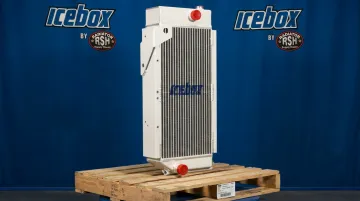
One important fitment note: Bobcat mini excavators run different engine platforms across model years and serial ranges, including various Kubota and Bobcat-branded diesel engines within the E-series lineup. A radiator that looks right but doesn't match your machine's specific engine configuration can cause persistent cooling problems even after a clean install. Always confirm fitment against your model number and engine family before ordering.
Bobcat Mini Excavator Radiator Maintenance Schedule
Bobcat's own operator manuals set baseline service intervals, but real-world use dictates how often you actually need to clean the radiator. A machine grading sandy lots five days a week needs far more attention than one doing occasional utility work.
| Interval | Task |
|---|---|
| Daily / Before Each Use | Visual check for debris buildup and coolant level |
| Every 250 Hours or Monthly | Compressed air blow-out of fins, coolant level and condition check |
| Every 500 Hours or Seasonally | Full wet cleaning with radiator cleaner, hose and cap inspection, fin straightening as needed |
| Annually or Every 1,000 Hours | Full cooling system flush and coolant replacement, pressure test, professional inspection |
Adjust these intervals based on operating conditions:
- Dusty or debris-heavy sites: Shorten cleaning to every 100–150 hours when grading sandy lots or cutting through tall grass and crop debris
- High-heat summer stretches: Check coolant concentration more frequently to prevent overheating
- Damp or humid conditions: Clear debris from the fins promptly — moisture trapped against an aluminum core accelerates corrosion
Conclusion
Keeping a Bobcat mini excavator radiator clean, and catching minor damage before it spreads, is one of the most effective ways to prevent overheating and avoid downtime that stops a job cold.
It's a task that takes under an hour but protects a machine that costs tens of thousands of dollars to replace.
Most cleaning and minor repairs are well within reach of any operator with basic tools. Knowing when to hand a problem to a professional, or when to simply replace the unit, matters just as much as the cleaning itself.
Start by checking your hour meter against the schedule above and book your next radiator service accordingly. If replacement turns out to be the right call, sourcing a correctly-fitted aftermarket unit from a supplier like Radiator Supply House gets your machine back to full cooling capacity without weeks of downtime waiting on a dealer.
Frequently Asked Questions
What are the symptoms of a dirty Bobcat mini excavator radiator?
Watch for rising coolant temperature during normal operation, visible debris packed into the fins, reduced engine power or sluggish hydraulics, and coolant leaks. In a mini excavator's compact engine bay, heat escalates fast once airflow is restricted.
How often should I clean my Bobcat mini excavator radiator?
The general recommendation is every 250–500 operating hours, but shorten that to every 100–150 hours in dusty, grassy, or debris-heavy conditions. A quick visual check before each use takes seconds and catches buildup early.
Can I use a pressure washer to clean my Bobcat mini excavator radiator?
Yes, but only on the lowest pressure setting, directed in line with the fins rather than across them. High-pressure washing is a leading cause of bent, damaged fins on mini excavator radiators.
What cleaning solution is safe for a Bobcat mini excavator radiator?
Use a foaming, non-acid radiator cleaner made for aluminum-core radiators. Avoid household degreasers or acid-based cleaners, which can corrode the aluminum fins and tubes most Bobcat radiators use.
Can I repair a cracked Bobcat mini excavator radiator myself?
Minor external cracks or pinhole leaks can be temporarily patched with epoxy compound or stop-leak additive. Internal tube cracks or cracked end tanks need professional repair, and any DIY fix is a short-term measure only.
When should I replace rather than repair my Bobcat mini excavator radiator?
Replace when there are multiple leak points, structural core damage, or when repair costs approach the price of a new unit. Aftermarket OEM-equivalent radiators offer a cost-effective alternative to dealer parts.